Pool Balancers

 
Filter

Filters

Subcategory

    Reset

    Pool Balancing Chemicals and Testing

    When you're ready for a refreshing dip in the pool, the last thing you want to do is dive into a vast abyss of murky water. So, it is essential to understand the maintenance required to keep your pool pristine, and HTH™ is here to help!

    Optimal Pool Maintenance

    Pool balancing chemicals can save you from expensive pool damage, uncomfortable skin irritation, and unpleasant water. Using a pool stabilizer is necessary for maintenance because it helps retain the sanitizer in the water. Without a pool stabilizer, the sun can absorb chlorine and throw off the balance of the pool. You'll know if you have the proper chemical balance by doing regular tests. You will test and adjust levels of pool balancing chemicals in the following order: alkalinity, pH, and calcium hardness. Finally, you can add sanitizer, adjust cyanuric acid, and shock the pool.

    The HTH Advantage

    Selecting the right brand of pool balancing chemicals is just as important as following the maintenance schedule. HTH has been a long-trusted brand by consumers that want to extend the life of the pool. HTH is known to be gentle on pool equipment while still providing all the necessary chemical benefits.

    Your Product Guide

    Experience a healthy swimming experience with an HTH™ pool stabilizer and pool balancing chemicals. Use the following solutions, which are compatible with all swimming pools.

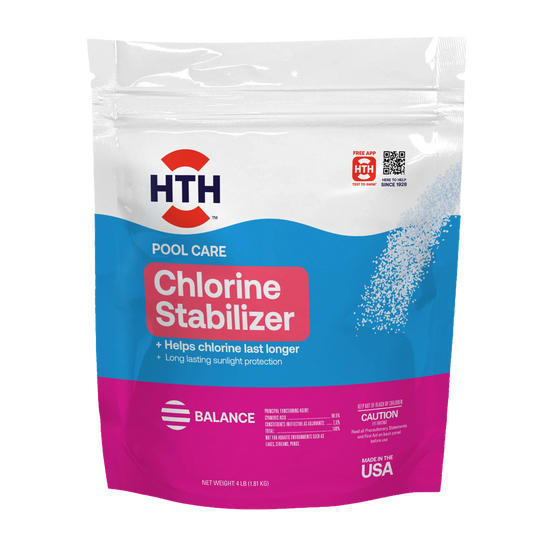
    HTH™ Pool Care Chlorine Stabilizer protects against sunlight to help chlorine last longer.

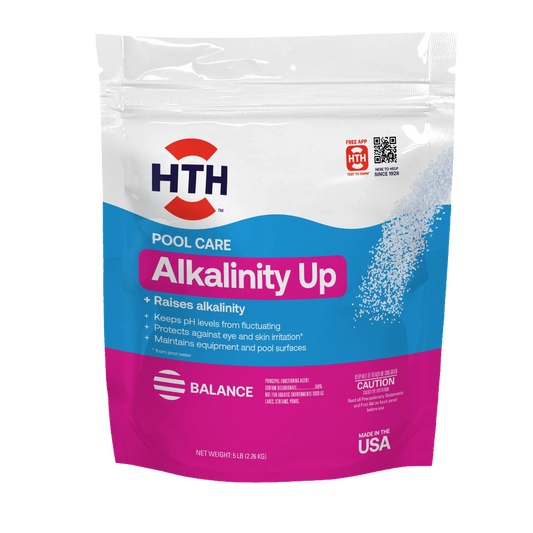
    HTH™ Pool Care Alkalinity Up raises alkalinity into the proper range, which then helps maintain the pH levels. It also reduces skin and eye irritation for swimmers.

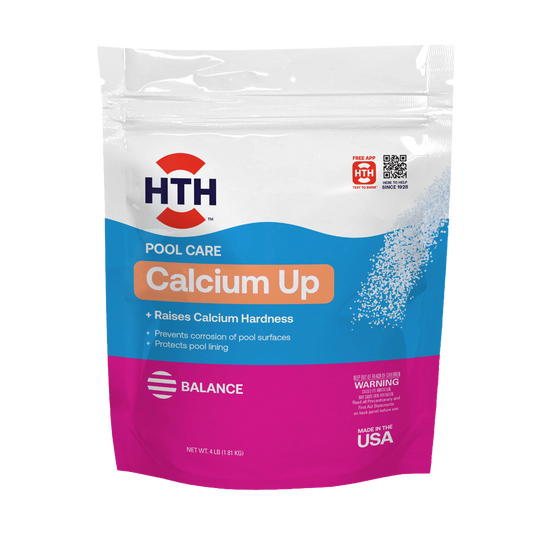
    HTH™ Pool Care Calcium Up protects pool surfaces (especially plaster) and equipment.

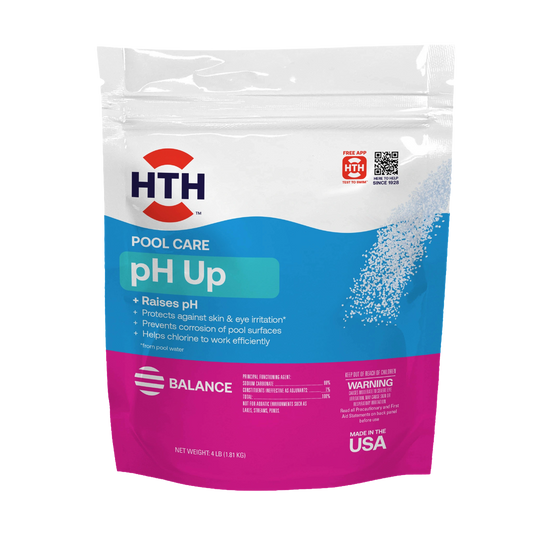
    HTH™ Pool Care pH Up increases pH levels for chlorine efficiency and swimmer comfort.

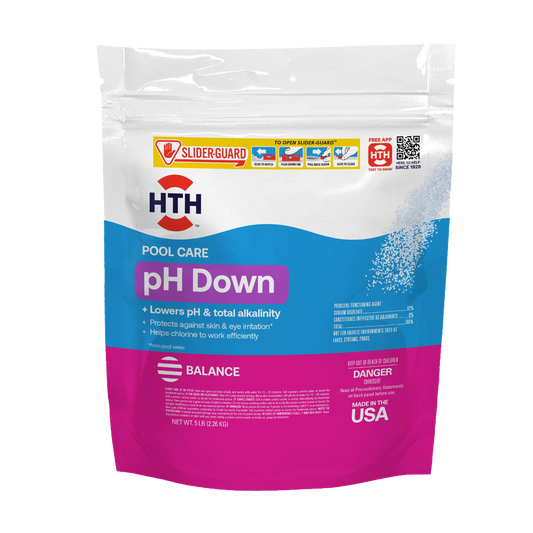
    HTH™ Pool Care pH Down balances chemicals by lowering pH and alkalinity levels to reduce scale formation, prevent cloudy water, and improve water comfort.

    HTH™ Pool Care 6-Way Test Strips and HTH™ Pool Care 6-Way Test Kit test total chlorine, bromine, pH, alkalinity, hardness, and cyanuric acid levels. You'll get fast, accurate results no matter how you test.

    Give Your Pool the Best Care with HTH™ products. Act now! Find HTH™ at a retailer near you and shop our products today!

    HTH pool water balancer products lined up beside a swimming pool for maintaining proper pH, alkalinity, chlorine stabilizer, and calcium

    Pool Balancers
    Frequently Asked Questions

    • What order should I add pool balancing chemicals?

      Always balance in this order: (1) alkalinity, (2) pH, (3) calcium hardness, (4) stabilizer/CYA, (5) sanitizer. Alkalinity must be correct first because it stabilizes pH. Adjusting out of order can cause your corrections to offset each other.

    • How do I know which balancing chemical my pool needs?

      First, test your water. If alkalinity is low, add Alkalinity Increaser. If pH is low, add pH Up. If pH is high, add pH Down. If calcium hardness is low, add Calcium Hardness Increaser. If CYA is low, add Chlorine Stabilizer. Never add multiple chemicals at once—adjust one at a time.

    • Why does pool water need to be balanced?

      Unbalanced water — too acidic or too alkaline — reduces chlorine effectiveness, corrodes or scales pool equipment and surfaces, and causes eye and skin irritation. Balanced water also extends the life of your pool and saves money on chemical costs.

    • What is the Langelier Saturation Index (LSI) and do I need to worry about it?

      The Langelier Saturation Index (LSI) is a formula that tells you whether your pool water is balanced—neither corrosive nor scale-forming—based on the combined relationship of pH, alkalinity, calcium hardness, temperature, and total dissolved solids (TDS). While you do not need to calculate it manually, keeping all of these parameters within their ideal ranges achieves a balanced LSI naturally. The HTH 6-Way Test Kit tests all the key parameters.

    • How does rain affect pool water chemistry and what should I do after a heavy rain?

      Rainfall lowers pH because rain is naturally acidic, dilutes chlorine and other chemicals, and can introduce phosphates, metals, and organic debris. After heavy rain, test all parameters immediately, adjust alkalinity and pH, shock the pool, and add algaecide as a preventive measure. The more rain, the more significant the dilution effect on your chemistry.

    • How do I balance pool water for the first time at pool opening?

      Start with a clean slate: fill to the normal level, test everything, and adjust in order—alkalinity first (60–120 ppm), then pH (7.2–7.6), then calcium hardness (200–500 ppm), then add CYA if it is below 20 ppm, and then shock. Allow 24–48 hours of filtration between major adjustments. Never add multiple balancing chemicals at once.

    • Can I use baking soda instead of alkalinity increaser?

      Baking soda (sodium bicarbonate) is the same active ingredient as most commercial alkalinity increasers, including HTH's. Using pool-grade products ensures consistent quality, correct granulation for dissolving, and accurate dosing guidance based on tested formulations. If you use baking soda, be precise with measurements and test frequently — dosing errors are common without labeled pool-size guidance.

    • How long should I wait between adding different balancing chemicals?

      Wait at least 4–6 hours, ideally with the pump running, between each chemical addition. This gives the chemical time to fully dissolve, distribute, and take effect before you test and decide on the next adjustment. The order matters: alkalinity ? pH ? calcium hardness ? CYA ? sanitizer. Never add multiple chemicals simultaneously.

    • Can high alkalinity cause cloudy pool water?

      Yes. High total alkalinity can push pH upward and make it harder to correct, which can contribute to cloudy water, scale, and weaker chlorine performance. First, test with HTH 6-Way Test Strips or the HTH 6-Way Test Kit. If alkalinity and pH are high, use HTH pH Down according to the label, let the water circulate, and retest before adding another chemical.